Answer / Buying guides
Balcony Solar in the US: Which States Allow Plug-In Solar Panels
Plug-in balcony solar explained: how it works, the 1,200 W limits, which US states allow it (Utah, Maine, Virginia and more) and what to check first.
- Updated
- September 28, 2026
- Read
- 6 min
- Sources
- 21
We may earn a commission when you buy through links on this page. Listings and prices come from our partners and change often. How we make money.
Balcony solar, also called plug-in solar, is a small solar panel kit with a microinverter that plugs into a standard household outlet. As of September 28, 2026, nine US states have enacted laws for it: Utah, Maine, Virginia, Maryland, Colorado, Connecticut, Vermont, New Hampshire and New Jersey. Most cap systems at 1,200 watts; Colorado allows 1,920.
Note
What is plug-in (balcony) solar?
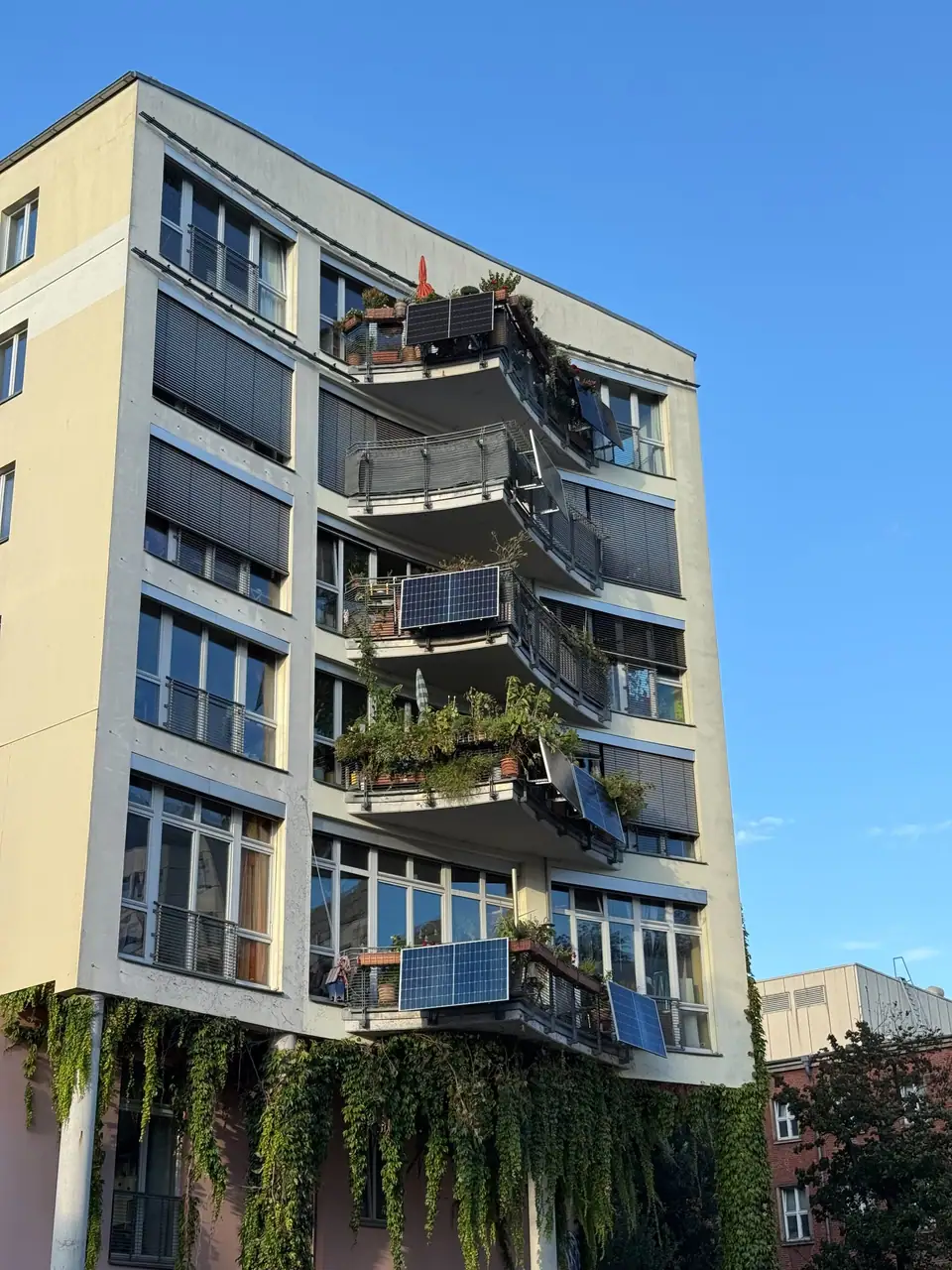
A plug-in solar system is one or two solar panels, a microinverter that turns their DC output into household AC power, and a cord that plugs into a wall outlet. The panels usually hang on a balcony railing, sit on a patio or lean against a wall.
The power flows into your home’s wiring and is used by whatever is running at the time, such as a refrigerator, router or TV. That lowers the amount you draw from the grid while the sun is up. Maine’s law describes the purpose as offsetting “on-site electricity consumption.”
The idea took off in Germany, where these units are called Balkonkraftwerke. Germany’s grid regulator limits them to 800 VA of inverter output and 2,000 W of panel capacity, and owners register them in a national database.
Which states allow plug-in solar panels?
Nine states had enacted plug-in solar laws as of September 28, 2026. Utah was first, in 2025. The rest passed in 2026. Several are not in force yet, and the notification rules differ a lot from state to state.
| State | Law | Size cap | In effect | Utility and notice rules | Source |
|---|---|---|---|---|---|
| Utah | HB 340 (2025) | 1,200 W, 120 V outlet | May 7, 2025 | Utility may not require approval, fees or extra equipment | Bill text |
| Maine | LD 1730 (Public Law ch. 644) | 1,200 W export; up to 420 W without an electrician | July 29, 2026 | Above 420 W: licensed electrician, dedicated circuit and notice to the utility within 30 days | Law text |
| Virginia | HB 395 (Code § 56-596.8) | 1,200 W per customer or apartment unit | January 1, 2027 | Notify the utility on a state form before installing; the utility has 15 days to review | Code section |
| Maryland | HB 1532, Utility RELIEF Act (ch. 353) | 1,200 W; one system per meter | July 1, 2026 | Notify the utility before installing and certify safety features; pay for a locking disconnect switch if one is required | Chapter text |
| Colorado | HB26-1007 | 1,920 W; one system per address | August 12, 2026 (HOA and UL sales rules from January 1, 2027) | Utility may ask you to report the system and its size | Bill page |
| Connecticut | HB 5340 (Public Act 26-127) | 1,200 W, 120 V outlet; one per meter | October 1, 2026 | No utility approval or fee; must meet UL 1741 and the State Building Code | Act text |
| Vermont | S.202 (Act 149) | 1,200 W combined per meter; smart meter required | July 1, 2026 | No utility approval or fee; tenants give the landlord 10 days’ notice | Act text |
| New Hampshire | SB 540 (2026) | 1,200 W AC; one per metered customer | Signed July 2026; code and interconnection updates wait on national standards | No utility approval, fee or interconnection agreement; utilities may offer a way to record system size | NHPR report |
| New Jersey | S2368/A4836, Garden State Balcony Solar Act | 1,200 W | March 1, 2027 | No utility approval or interconnection agreement; 14 days’ written notice to a landlord or HOA | Governor’s release |
New York’s legislature has passed the SUNNY Act (A.9111C/S.8512C). Canary Media reported in June 2026 that it would allow systems up to 1,200 watts with an online notification, and that the governor had until the end of 2026 to act. Check its status before you plan around it.
What the state laws have in common
Almost every law exempts qualifying systems from the interconnection agreement that rooftop solar needs. Most also bar the utility from charging a fee or requiring extra equipment. In return, the device must be certified by a nationally recognized testing laboratory and must shut itself off during a blackout.
Exported power usually earns nothing. Maine and Vermont exclude plug-in systems from net metering, and Connecticut requires a warning that excess generation may be billed as usage unless you have a net metering meter. A system sized to your daytime base load wastes less.
How is plug-in solar different from a portable power station?
The two are often confused because both use panels and plugs. They solve different problems.
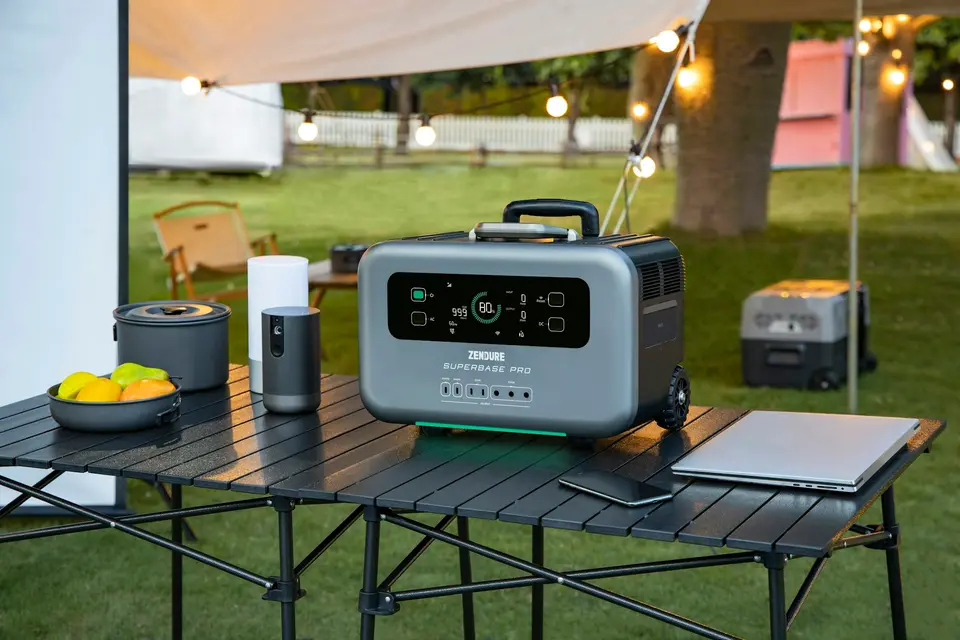
A plug-in solar kit feeds your home’s wiring. It has no battery unless you add one, and it goes quiet when the grid goes down. A portable power station, often sold as a solar generator, stores energy in its own battery. You plug appliances into it, and it keeps running through an outage.
If backup power is your goal, start with our solar generator buying guide. To see what a popular size handles, read what a 1000Wh power station can run, which covers a fridge, CPAP and lights. For whole-house questions, see solar generators for home backup. Shopping for a renter? Our solar generator gifts guide covers a power station and folding panel setup for a balcony.
Portable solar panels for charging a power station
Live prices from Anker Solix, updated 30 min ago


Is plug-in solar safe?
UL Solutions launched UL 3700, its test program for plug-in photovoltaic equipment, in January 2026. It covers shock protection, overload protection and preventing current from flowing the wrong way. Maine and Vermont name UL 3700 in their laws. Connecticut cites UL 1741, the inverter standard.
In a March 2026 webinar, UL flagged risks that existing electrical codes do not anticipate. These include undetected overloads on a shared circuit and live prongs on a plug that is pulled out while the panel is producing. UL listed dedicated circuits and built-in ground-fault protection among the ways to reduce those risks. Maine already requires a dedicated circuit above 420 W, and Colorado limits you to one device per outlet.
Certified products are still new. Utah Public Radio reported in June 2026 that UL had not yet certified any plug-in system. Ask the seller for the certificate and the testing lab’s name before you buy. New Hampshire’s law also directs the state to warn that unlisted systems may affect homeowners or renters insurance coverage.
What to check before you buy a balcony solar kit
- Your state’s law and start date. Use the table above, then read the linked text.
- Your utility’s notice form. Virginia, Maryland and Maine (above 420 W) require notice. Colorado lets utilities ask for it.
- Your lease or HOA rules. Vermont, New Jersey and Colorado set rules for landlords and associations. Maine requires tenants to avoid damaging the structure and to restore it on removal.
- The inverter’s AC output. Match it to your state’s cap, not the panels’ combined rating.
- Certification. Look for UL 3700 or a listing from another nationally recognized testing laboratory.
- Mounting. Vermont requires the device to be securely attached. Follow the maker’s mounting instructions for railings and walls.
Balcony and plug-in solar kits on eBay
Live prices from Anker Solix, updated 30 min ago


How much power does a balcony solar system make?
Output depends on panel wattage, direction, shading and your local sun. A 1,200 W system is about a sixth of the size of a median rooftop solar installation, according to Canary Media. It will not run your home, but it can cover part of the steady daytime load from appliances that are always on.
We do not quote prices or savings here because both change with the kit, your electricity rate and your state’s rules. Our guide to how much a solar generator costs explains how to compare storage options on cost per watt-hour if you are weighing a battery as well.
Frequently asked questions
Is balcony solar legal in the US?
It depends on the state. As of September 28, 2026, Utah, Maine, Virginia, Maryland, Colorado, Connecticut, Vermont, New Hampshire and New Jersey have enacted plug-in solar laws, though Virginia's and New Jersey's rules start in 2027. Elsewhere, your utility's usual interconnection rules still apply, so ask before you plug anything in.
How many watts can a plug-in solar system be?
Most state laws cap it at 1,200 watts. Colorado allows up to 1,920 watts, and Maine requires a licensed electrician and a dedicated circuit for anything above 420 watts. Germany, where balcony solar is common, limits the inverter to 800 VA.
Can renters install plug-in solar panels?
Some states address renters directly. Vermont requires tenants to give the landlord 10 days' notice, and New Jersey's law requires 14 days' written notice to a landlord or HOA, which may set reasonable limits on size and placement. Read your lease and ask your landlord in writing first.
Does balcony solar work during a power outage?
No. The state laws require a feature that stops the system from energizing the building's wiring when grid power fails. For outage power you need a battery, such as a portable power station, that runs appliances plugged directly into it.
Is a plug-in solar kit the same as a solar generator?
No. A plug-in kit sends solar power into your home's wiring through an outlet to trim your bill while the sun shines. A solar generator (portable power station) stores energy in its own battery and powers devices plugged into it, including during an outage.
Sources
- H.B. 340 Solar Power Amendments (Enrolled Copy)Utah State Legislature
- An Act to Make Small Plug-in Solar Generation Devices Accessible for All Maine Residents (Public Law, Chapter 644)Maine State Legislature
- Laws of the State of Maine, 132nd Legislature, Second Regular SessionMaine Revisor of Statutes
- Code of Virginia § 56-596.8, Small portable solar generation devices; exempt from interconnectionVirginia General Assembly
- HB1532 Utility RELIEF Act (Chapter 353)Maryland General Assembly
- Chapter 353, 2026 Laws of Maryland (HB 1532)Maryland General Assembly
- HB26-1007 Improve Customer Use Distributed Energy ResourcesColorado General Assembly
- Public Act No. 26-127, An Act Concerning Renewable Power GenerationConnecticut General Assembly
- Act 149 (S.202), An act relating to plug-in photovoltaic devicesVermont General Assembly
- New Hampshire joins growing contingent of states with laws on plug-in solarNew Hampshire Public Radio
- New Hampshire legislature advances plug-in solar bill to governorpv magazine USA
- All Solar Big and Small: Plug-In Solar is Coming to New HampshireClean Energy NH
- Governor Sherrill Signs Legislation Giving New Jerseyans Cleaner, More Affordable Energy at Their FingertipsState of New Jersey, Office of the Governor
- Sherrill signs energy bill to allow easier installation of plug-in solar systemsROI-NJ
- New Jersey legislature unanimously passes plug-in solar billpv magazine USA
- SUNNY Act Passes NYS Legislature, Bringing Plug-In Solar One Step Closer To Becoming LawNew York State Senate
- Will New York Gov. Kathy Hochul sign a balcony solar bill?Canary Media
- Utah approved balcony solar last year. It started a nationwide movementUtah Public Radio
- Plug-In Photovoltaic Systems: Residential Safety ConcernsUL Solutions
- UL Solutions debuts testing criteria for plug-in solar systemsSolar Builder
- Balkon-SolaranlagenBundesnetzagentur (German Federal Network Agency)
Part of Best Solar Generators (Portable Power Stations) for Home and Camping