Answer / Comparisons
Solar Generator vs Gas Generator for a Power Outage
Solar generator or gas generator for an outage? Compare exhaust and indoor use, fuel, runtime, recharging and noise, with CPSC and Ready.gov safety rules.
- Updated
- October 2, 2026
- Read
- 4 min
- Sources
- 09
We earn from qualifying purchases through links on this page. How we make money.
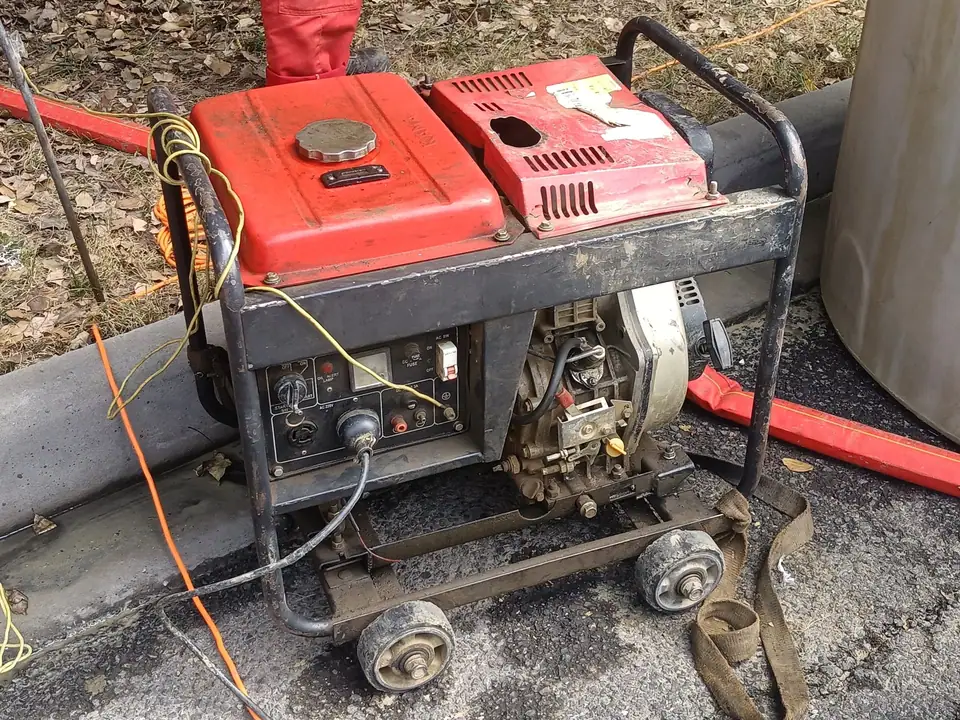
For most outages, a solar generator is the safer pick for indoor loads and a gas generator is the longer-running one. A battery power station has no exhaust, so it can sit beside the fridge or a CPAP. A gas generator makes carbon monoxide, so CPSC says to run it outside only, at least 20 feet from the house.
Solar generator vs gas generator at a glance
| Question | Solar generator (battery power station) | Gas portable generator |
|---|---|---|
| Where it can run | Indoors or out: no engine exhaust | Outside only, at least 20 feet from the house (CPSC) |
| Energy source | A stored battery, refilled from a wall outlet, solar panels or a car | Fuel in its tank |
| How long it runs | Fixed by capacity: a 1 kWh unit gives roughly 820 to 920 Wh at the AC outlets (EcoFlow’s estimate) | As long as it has fuel |
| Refilling | Within the unit’s solar input limit, such as 500 W on the BLUETTI AC180 or 1,000 W on the EcoFlow DELTA 3 Max Plus | Refuel the tank, following the manual |
| Main hazard | Battery care: follow the maker’s charging and temperature limits | Carbon monoxide |
| Campgrounds | No engine, so generator hours rarely apply | Often limited: Yosemite allows generators only at set hours |
The short version: a battery unit trades runtime for safety and quiet, and a gas generator trades safety and quiet for runtime.
Why carbon monoxide changes the decision
CPSC says an average of nearly 100 people in the U.S. die each year from carbon monoxide poisoning caused by portable generators. In its 2023 report it said one portable generator produces as much carbon monoxide as hundreds of cars, and that people can become unconscious before they notice symptoms such as nausea, dizziness or weakness.
That is why the placement rules are strict, and why the outage plan matters as much as the machine. A generator that has to sit 20 feet from the house needs a safe outdoor spot, cords long enough to reach it, and someone to refuel it.
Safety
Ready.gov adds two practical rules: keep the generator dry and protected from rain or flooding, and connect appliances with heavy-duty extension cords. CPSC also warns against plugging a generator into a wall outlet to feed house wiring, a practice called backfeeding that endangers utility workers and neighbors.
When a solar generator is the better choice
Overnight and indoor loads. A CPAP, a router or a lamp in the bedroom needs power where people sleep, which is exactly where a fuel engine cannot go. Ready.gov advises talking to a medical provider about an outage plan for any powered medical device.
- Apartments and homes without a safe outdoor spot. If there is nowhere 20 feet from the house to run an engine, a battery unit is the practical option.
- Short outages. Ready.gov says a refrigerator keeps food cold for about four hours without power and a full freezer holds its temperature for about 48 hours. A battery unit can bridge a fridge through a daylong outage; what size solar generator runs a refrigerator has the math.
- Campsites with generator hours. A battery unit has no engine to run during quiet hours.
When a gas generator makes more sense
Long outages with little sun. A battery stores a fixed amount of energy. The U.S. Energy Information Administration puts average home use at about 29.6 kWh a day, while the 1 kWh and 2 kWh classes in our buying guide store 1 to 2 kWh. Without sun or wall power to refill it, a battery unit covers critical loads for a limited time.
Large or 240 V loads. Well pumps, central air and electric ranges can need high output and 240 V. Only some large power stations list 240 V output; what a 3000 watt solar generator will run covers that class.
Either way, the placement rules above apply every time a gas generator runs.
Home backup solar generators (2 kWh and up)
Live prices from Anker Solix, updated 9 min ago


Can you use both?
Yes, and the jobs split naturally. A battery unit can cover the indoor, overnight and medical loads, while a gas generator runs outdoors at a safe distance for larger loads during the day. Check the power station’s manual before charging it from a generator, and never connect either one to house wiring except through transfer equipment installed as the maker specifies. Our home backup guide covers transfer switches.
Where to go next
Size a battery unit for your own loads with what size solar generator you need, and see how quickly each model refills in how to charge a solar generator. To compare current models, start with our best solar generators guide.
Frequently asked questions
Can I run a solar generator indoors?
Yes. A battery power station has no engine and no exhaust, which is why it can sit beside a fridge or a bedside CPAP during an outage. Follow the maker's manual for charging, temperature and ventilation around the unit.
How far from the house should a gas generator be?
CPSC says to run a portable generator outside only, at least 20 feet from the house, with the exhaust pointed away from any building. Ready.gov gives the same 20 feet from windows, doors and attached garages.
Is it safe to run a generator in the garage with the door open?
No. CPSC says never to run a portable generator inside a home, garage, basement, crawlspace or shed, and that opening doors or windows will not give enough ventilation to prevent a lethal buildup of carbon monoxide.
Is a solar generator enough for a power outage?
For critical loads, often yes. A fridge, four LED bulbs, internet and a CPAP need about 2,670 Wh of battery for one day in our worked example, which points to a 2 kWh unit plus solar recharging, or a larger system.
Sources
- CPSC Issues Winter Weather Safety Tips to Prevent Fires and Carbon Monoxide PoisoningU.S. Consumer Product Safety Commission
- New CPSC Report Shows Upward Trend in Carbon Monoxide (CO) FatalitiesU.S. Consumer Product Safety Commission
- CPSC Safety Alert: Portable Generator HazardsU.S. Consumer Product Safety Commission
- Power OutagesReady.gov (FEMA)
- Test Your Power Station Runtime Before an EmergencyEcoFlow
- BLUETTI AC180 Portable Power StationBLUETTI
- EcoFlow DELTA 3 Max Plus (2048Wh) specsEcoFlow
- How much electricity does an American home use?U.S. Energy Information Administration
- Campground RegulationsYosemite National Park, National Park Service
Part of Best Solar Generators (Portable Power Stations) for Home and Camping